
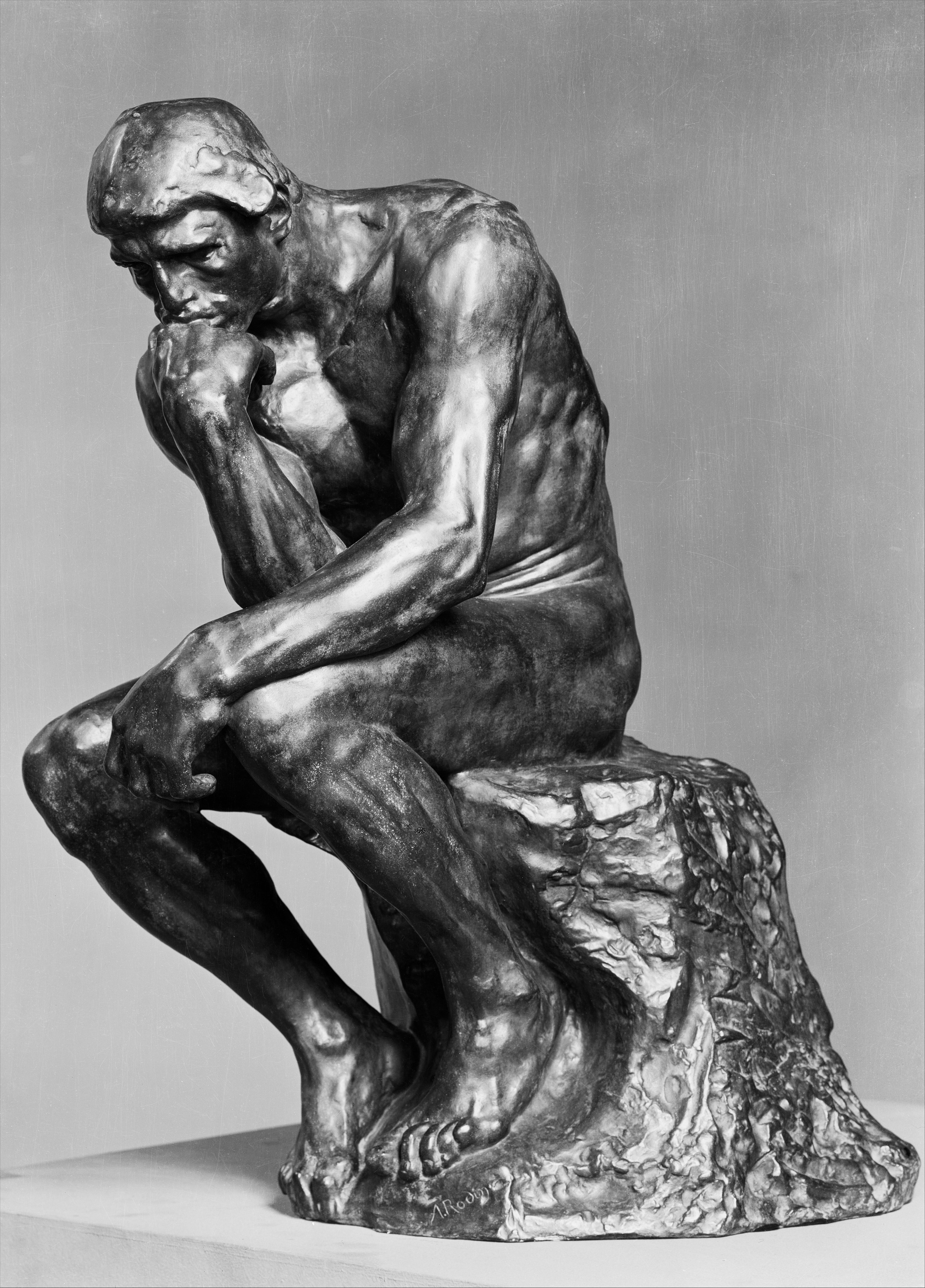
Yes, I know that the above title is seen as an oxymoron, a clear contradiction of terms. But please bear with me for a moment. In my last blog I shared a sampling of how I became a Christian through an emotional process. This is an attempt to share my more analytical process that has led me to retain my faith in a God I cannot see, touch, or otherwise experience in a physical manner.
The dictionary defines a Free Thinker as “a person who rejects accepted opinions, especially those concerning religious belief.” Skeptic magazine, Reason magazine, various atheistic groups, and many others view this as meaning the rejection of religious beliefs based on sound, empirical evidence. In other words, Free Thinkers reject GOD!
My great, great grandparents, Phillip and Sarah Kirby, were members of the Free Thinkers Society, in New Ulm, Minnesota in the 1860’s. The society met regularly to discuss why there is no god, and to share their disdain for religion in general. Their daughter, Blanch married William Hilby in 1885, who was a Catholic by name, but in reality, an atheist. Thus, was the family legacy of free-thinkers solidified. The Hilby’s and Kirby’s rejected the belief in something greater than themselves, or in other words: GOD.
Like my ancestors, I am by nature a skeptic. I need real proof before I am convinced of any argument. Understanding that emotion plays a huge part in many life decisions, I insist on waiting before making major decisions until I have had a chance to analyze and weigh the options. Car salesmen hate me, because I do my homework, think through the pros and cons, and refuse to “fall in love” with what they insist is the car of my dreams. In this way I try to put emotions aside as much as possible and come to a rational conclusion.
As stated in a previous blog, I originally came to be a Christian as a teenager through an emotional appeal, during an emotional time in my young life. However, I have since spent much time engaging in a thoughtful process to determine whether, or not, what I once accepted is still either relevant or true. A number of beliefs I once held have been overturned by a reasoned, analytical approach. I found myself questioning everything I had held dear.
Questioning my beliefs was most evident to the consternation of my college professors. Going to a small Christian liberal arts college, I found myself questioning many of the assertions of faith, theology, and orthodoxy expected of the followers of this religion. I could see the shake of their heads, intake of breath, and resigned look on their faces as I would enter the classroom. They, and many of my fellow students, must have wondered if I would ever be satisfied. I questioned everything and refused to accept that I “just needed to have faith. Just believe!” That was one answer that I refused to accept. Seven years and two degrees later, I was largely satisfied.
That does not mean that I have always remained satisfied. Over time I continue to question the assertions of my faith. I have a large collection of works by atheists to include the granddaddy of modern atheism, Bertrand Russell, as well as Hitchens, Dawkins, Stenger, Ehrman, and others. As I pick up the next volume, I begin by asking the author to challenge me, to show me where I have gone wrong, to bring illumination; especially in those times when I am most questioning.
I don’t pretend to have all the answers, but I have found that atheism (the belief there is no god) and agnosticism (the belief that we do not know if god exists) have not held the answers for which I’ve searched. I keep coming back to a largely orthodox belief in a God who created the universe yet knows me by name.
I am a free-thinking skeptic. This is not an oxymoron. My free-thinking skepticism has actually made my faith stronger. Exploration and questioning have brought me to acknowledge that God is real. Over time, I’d like to share some of the specifics of my quest for knowledge. Thanks for reading, and I’ll see you next time.
 Tracy AtHome Church