

A Student, A Samaritan, and a Sociopath

I have three stories to tell, and will try to keep this somewhat short.

I spent over seventeen years as a substitute teacher in the local high schools. I made no secret that I was a pastor, and found that this knowledge often sparked conversations with students. One day, a student approached me after class and stated “I’m an atheist.” Before I could respond, he yelled, “I hate you. All Christians are intolerant so I hate you.” He then ran from the classroom as though he expected some horrendous explosion from me. Had he stayed around, he would have heard me ask him why he thought as he did. After all, this was not the first time a student had shared their disagreement with my beliefs. I have had the opportunity to discuss such matters with Wiccans, Buddhists, Muslims, and others. ( And yes, such conversations are allowed in the public schools.)

Which brings me to my second story. Jesus was having a discussion with an expert in religion. The expert asked Jesus what he must do to inherit eternal life. After some back and forth, the man stated that the law required him to love both God and his neighbor. Trying to be lawyerly, the man asked “who is my neighbor!” This was an important question because then he would know who he HAD to love, and who he could ignore or even hate.

Jesus then launched into what we know as the parable of the Good Samaritan. The set-up was that a Jewish man had been robbed and left for dead by bandits. Two religious Jewish leaders passed the man by, as he would be a hindrance to them. Only a Samaritan man picked the man up, tended his wounds, set him up in a lodge, and paid for his accommodations.

Like many stories told by Jesus, this often lacks context in our modern telling. The reality is that Samaritans and Jews really hated each other. The Jews saw the Samaritans as “half-breeds.” Think of the war and the hatred that some “full blood wizards” for those who were not, in Harry Potter, and you have some idea of the hatred involved. The Jews would not allow the Samaritans to help in the construction of the new temple, chased them out of Jerusalem, and burned down the Samaritan temple. They even fought on opposite sides during a Greek occupation.

So when Jesus stated in this story that even the hated Samaritans were to be seen as neighbors, his audience would have been shocked and even angry. No way! Besides, neighbor was universally seen as 1) family, 2) clan, and 3) tribe or nation. Anyone outside this setting could not be considered a neighbor, much less someone to be loved. That Jesus would even consider a Samaritan as worthy of love was a radical idea both in that time, as well as this.

This leads me to the third story. Two weeks before I sat down to write this, a man in New Zealand went into two mosques, opened fire, and killed fifty Muslims while at Friday prayers. This man can clearly be called a sociopath. What he did was a crime not only against these Muslims, but against God as well.

There are those who might think that I and other Christians would rejoice that our “enemies” were harmed. That all Christians and any who disagree with them are in a perpetual war, with each side espousing hatred. Supposedly, you are either a hater, or you must agree that ALL religions are equally true, and there is not “A” truth.

Both statements are false. I do not hate my Muslim neighbors. I have actually had several Muslim friends, including my wife’s former boss. I found mutual respect and even admiration between myself and these friends. On a number of occasions, my friends tried to share with me why I should convert to their religion. This was not hatred, it was shared in love, as they wanted me to know God (or Allah) as they did. I, in return, shared my faith as well, also out of love. There was no shouting, anger, or hostility, only love and concern for my supposedly “Samaritan” neighbors, and they for me.

This is what the murderer, the religious leader, and the student don’t get. That we can have differences, even strikingly strong differences, and still love one another. This is true tolerance. I am a strongly committed Christian. I have equally strong differences with other faiths, including Muslims. Yet I don’t love just my “tribe” of other Christians. My faith in Jesus makes me see ALL others as people created by God, deserving of my love and, if needed, my forgiveness.

I cry at the thought that fifty of my fellow human beings were murdered. I hate true intolerance, and fight against it. I love people wherever they are religiously, politically, racially, or nationally. After all, as Jesus showed, ALL are my neighbors, therefore they all need and deserve my love. Even today, this stands out as a most radical thought. Until next time.
STEPHEN HAWKING, THE BIG BANG, AND CHRISTIAN FAITH

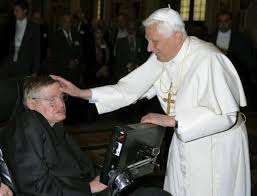
As a college student back in 1973, I read an article by the eminent physicist Stephen Hawking. He was imploring his fellow scientists to stop asking the question, and to stop exploring how the Big Bang came to be. Hawking was afraid that by asking the question it would allow for the possibility of GOD. He feared that people of Christian faith would use the question as a proof that God must exist. If we ignore the question, he felt, then those scientists who oppose the belief in a creative power outside nature could insist that God is unnecessary.

Shortly before his death, Hawking doubled down on his view by writing a book entitled “Brief Answers to the Big Questions.” In his chapter on God, he states that science has largely shown that God is unnecessary. In fact, Hawking died believing that all the questions we are asking of the universe will be solved by the end of this century. Since we can now see this accomplishment in our near future, God is obsolete. Hawking insists that if God is unnecessary, then He cannot exist. God can only exist if one can prove that He is necessary.

For some time now, people of faith have asked some uncomfortable questions about the beginning of our universe. How did all those atoms necessary for the Big Bang come into being? How did they coalesce into a form? How did they collide with each other at just the right speeds, directions, and combinations to produce a Big Bang that not only went against all known laws of physics, but resulted in an orderly universe that follows a set of rules as can be defined by physics?

When scientists refused to go along, Hawking began to articulate a theory that seems better suited to Star Trek fans: The Multi-Universe Theory. This theory states that an infinity of universes were all begun at the same instant. In this theory, our universe would have had to form as it is without God, because in an infinity of Big Bangs at least one would have had to be formed that matches our own. Therefore, God is not needed. Therefore, He does not exist.

The problem with this theory should be evident to any who seriously consider it. The same questions articulated above still need answers. In each of these worlds, how did the atoms form, coalesce, move at various speeds, etc.? This puts us right back at the question that Hawking insists we should not ask. It permits the existence of God, therefore, maybe He does exist.

Hawking and others have proposed several other theories over the years, all leading to similar questions, all leading to the possible conclusion that God IS. Notice that I have not stated that God IS, only that the questions lead us to the possibility that He DOES exist. While I believe in His existence, I understand that science can neither prove nor, contrary to Hawking the eminent physicist, disprove scientifically that He does not. All Hawking can say is that he knows God is unnecessary. Even there he overreaches.

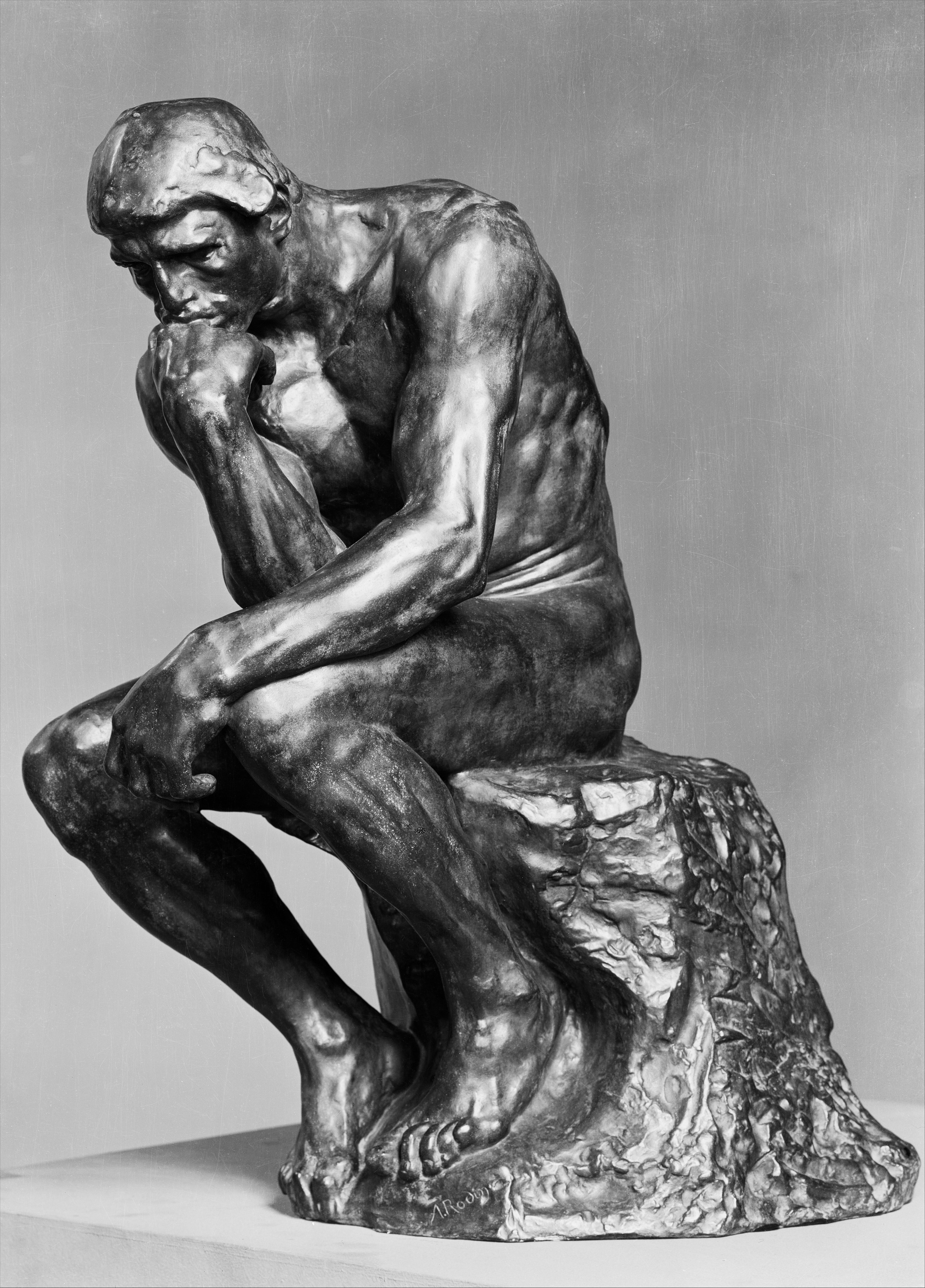
As a confirmed skeptic turned Christian, all I can say, unlike Dr Hawking, is to keep asking questions. Perhaps you too will find God somewhere in our vast universe. Until next time, take care.

I am a Free Thinker/Christian

Yes, I know that the above title is seen as an oxymoron, a clear contradiction of terms. But please bear with me for a moment. In my last blog I shared a sampling of how I became a Christian through an emotional process. This is an attempt to share my more analytical process that has led me to retain my faith in a God I cannot see, touch, or otherwise experience in a physical manner.

The dictionary defines a Free Thinker as “a person who rejects accepted opinions, especially those concerning religious belief.” Skeptic magazine, Reason magazine, various atheistic groups, and many others view this as meaning the rejection of religious beliefs based on sound, empirical evidence. In other words, Free Thinkers reject GOD!

My great, great grandparents, Phillip and Sarah Kirby, were members of the Free Thinkers Society, in New Ulm, Minnesota in the 1860’s. The society met regularly to discuss why there is no god, and to share their disdain for religion in general. Their daughter, Blanch married William Hilby in 1885, who was a Catholic by name, but in reality, an atheist. Thus, was the family legacy of free-thinkers solidified. The Hilby’s and Kirby’s rejected the belief in something greater than themselves, or in other words: GOD.

Like my ancestors, I am by nature a skeptic. I need real proof before I am convinced of any argument. Understanding that emotion plays a huge part in many life decisions, I insist on waiting before making major decisions until I have had a chance to analyze and weigh the options. Car salesmen hate me, because I do my homework, think through the pros and cons, and refuse to “fall in love” with what they insist is the car of my dreams. In this way I try to put emotions aside as much as possible and come to a rational conclusion.

As stated in a previous blog, I originally came to be a Christian as a teenager through an emotional appeal, during an emotional time in my young life. However, I have since spent much time engaging in a thoughtful process to determine whether, or not, what I once accepted is still either relevant or true. A number of beliefs I once held have been overturned by a reasoned, analytical approach. I found myself questioning everything I had held dear.

Questioning my beliefs was most evident to the consternation of my college professors. Going to a small Christian liberal arts college, I found myself questioning many of the assertions of faith, theology, and orthodoxy expected of the followers of this religion. I could see the shake of their heads, intake of breath, and resigned look on their faces as I would enter the classroom. They, and many of my fellow students, must have wondered if I would ever be satisfied. I questioned everything and refused to accept that I “just needed to have faith. Just believe!” That was one answer that I refused to accept. Seven years and two degrees later, I was largely satisfied.

That does not mean that I have always remained satisfied. Over time I continue to question the assertions of my faith. I have a large collection of works by atheists to include the granddaddy of modern atheism, Bertrand Russell, as well as Hitchens, Dawkins, Stenger, Ehrman, and others. As I pick up the next volume, I begin by asking the author to challenge me, to show me where I have gone wrong, to bring illumination; especially in those times when I am most questioning.

I don’t pretend to have all the answers, but I have found that atheism (the belief there is no god) and agnosticism (the belief that we do not know if god exists) have not held the answers for which I’ve searched. I keep coming back to a largely orthodox belief in a God who created the universe yet knows me by name.

I am a free-thinking skeptic. This is not an oxymoron. My free-thinking skepticism has actually made my faith stronger. Exploration and questioning have brought me to acknowledge that God is real. Over time, I’d like to share some of the specifics of my quest for knowledge. Thanks for reading, and I’ll see you next time.