
Thank you for visiting the At Home Church of Tracy. We are glad you dropped by, please take a look around and see what we have to offer. You can also find us on Facebook, YouTube, and in person. Please feel free to reach out to Pastor Steve!
Author: athomechurch

AREN’T ALL RELIGIONS THE SAME?
While in college, I had a friend who liked to irk people by saying “I’m not conceited. Conceited people have faults. I have none.” Of course we all know that this in and of itself is a conceited statement. Thankfully, my friend always said this in jest.
When people such as I and other Christians offer the statement that there is only one way to God, and that is through Jesus Christ, we are often assailed as being arrogant, conceited, uneducated, and possibly dangerous. After all,you might say, the belief in one way and only one way to God often leads to discrimination, violence and war. In another blog I’d like to talk about religion and violence. But for now I’d like to concentrate for a few moments on the concept of there being only one way, one truth.
First, it is important to recognize that there is both truth and beauty to be found in most religions. A random sampling of the Koran, the Vedas of Hinduism, and other holy works and unwritten beliefs show both some truth, and some beauty. The principles espoused by Ghandi, a Hindu follower, influenced Martin Luther King, both a Christian and civil rights leader in his struggle for equality in America. I have found writings from other religions outside my own to be both inspiring and helpful. However, that does not mean that they all religions teach the same thing, or are equally true, or even deserve equal billing.
It is popular today to insist that all religions are the same. Or that there are no absolutes, that whatever one believes is to be accepted whether there is any basis of fact to it or not. We live in a post-modern world where nothing is accepted as THE truth, where it is possible to believe and accept almost any belief. A friend of mine has consistently stated that she needs to find a religious belief that she can accept as “her” truth. She is convinced that the existence of god, God, gods, nature, or “what have you” are up to her to decide for herself. There is no explicit truth, only individual decisions on what to accept as personal truth.
In math (I originally planned to become a mathematician, and teach either high school or college math before studying instead to become a minister) and logic (one of my favorite classes back in the day) teach us that two things that are opposite can not both be true at the same time. For instance as I write this it is dark and rainy here in N. California. It would be ludicrous for me to insist that while dark and rainy it is also sunny and dry here in this time and place. The two cannot be true at one and the same time.
The same holds true in religion. We find statements in all that cannot be reconciled as being equally valid. For instance my Muslim friends (and yes I have Muslim friends) insist that Jesus was NOT the Son of God, but was merely a prophet. He was the 2nd greatest prophet after Mohammad, but a prophet nevertheless. Christians teach that Jesus was/is the son of God. The two statements cannot be reconciled. Muslims teach, as do Jews and Christians, that there is only one God. Hindus teach a multitude of gods and goddesses. Again the two cannot be harmonized. Only one can be “truth.” Several of my students over the years have been Wiccans, believing in the Goddess of the Moon, and celebrating nature. Each of them has assured me that both they and I cannot be correct. And of course both Atheists and those who believe in any form of religious belief cannot be right.
Grantley Morris, a Christian apologist, wrote:
“To overlook obvious differences between religions might seem broad-minded. In reality it is about as proud and narrow as a person could get. To say all religions are basically the same is to claim to be smarter than each of the billions of people who believe the unique aspects of their religion are of supreme importance to God. It is to claim that even though you are not an expert in their religion, you know they are wrong–you know their religion is really no different.”
Note that Morris is not saying this just about Christians, such as he and I, but about ALL religions. All claim some aspect as being true and different at the same time.
Ahh, you say, but isn’t a belief that one religion has the truth, that it is in some way superior to any other intolerant? NO!! Intolerance would be if I and others were to oppose the freedom for you to believe in and practice something different from my own beliefs. Tolerance is promoting your freedom to believe something even though I feel that you are mistaken. A student once told me that Christians are hateful towards Muslims in our town because the town council would not allow them to build a mosque on the property they owned. I had to tell them that we as Christians were had recently had the same problem, and showed him how we had to navigate the political arena. Today, largely thanks to my help, there is a large mosque on that site.
I still disagree with their beliefs. I am convinced that their religion is wrong. However, I agree with their right to believe and practice what they believe to be right. The same goes for those who are Wicca’s, Hindus, Sikhs, Atheists and all others. But I still cling to the realization that every one of our religions have major differences, and therefore not all can be true and right. Until someone can convince me otherwise (and I have allowed numerous friends, family, and acquaintances to try) I shall cling to my Christian ideals. Until next time.
JESUS: MAN OR MYTH?

Dr Bart Ehrman would seem to be a contradiction in terms, an atheist who is also a New Testament (Bible) scholar. He is a popular author of over a dozen books. Actually, Ehrman is one of several atheistic Bible scholars. Biblical scholars come in all shapes, sizes, and beliefs (or lack thereof.) In 2012, Ehrman wrote the book “Did Jesus Exist?” You would think that as an atheist, he would have concluded that the answer would be”NO!!” But instead it was an enthusiastic “YES.” In his introduction, Ehrman writes that virtually all scholars accept that Jesus did in fact exist. He felt bound to write the book to refute what he considers an uneducated view that Jesus is a myth. He even notes that the crucifixion was real, that Jesus died on a Roman cross. What the scholars cannot agree on is who or what Jesus was and meant for His time.
Growing up in the ’60’s, everyone I knew believed that Jesus was a real human who lived in the 1st century. The discussion back then was what or who Jesus was. His historical reality was seldom if ever in question. Today, however, it is popular to question whether or not Jesus really existed, or was he simply a myth made up by a group of people who were either desperate for some sort of meaning, or for power.
If you would Google Jesus you will find quite a few websites and YouTube videos that insist on the myth narrative. According to these, the “myth” of Jesus is simply a replay of other ancient myths, especially those which involve fertility rites. Some “god” or ‘goddess” dies in winter, then is reborn in the spring, releasing new life. But they fall far short of the story of Jesus. Let’s take a moment and look at one or two.
My favorite, and the one I see most cited, is the ancient Egyptian myth of Osiris, Isis, Set, and Horus. Osiris was the god of life, and was deeply involved in the cycles of life, including death. He was also responsible for the land of the dead. According to the myth, his brother Set was jealous of him, and wanted his throne as head of the gods. Set killed Osiris and cut him up into pieces.
Osiris’ wife, Isis, was devastated. She put all the pieces back together, so that he could go to the underworld and live. However, she could not find his penis, which had been eaten by a crocodile. So she had one made of gold and plunged it into her vagina in order to conceive a child from her now dead husband. The son, Horus, then killed his uncle in retaliation. Meanwhile, Osiris remained from then til now in the underworld, of which he can never escape.
Those who say that since Osiris is clearly mythological, therefore so is Jesus, are way off the mark. It’s hard to know where to begin in comparing the two accounts. First, all the characters in the Osiris story are gods, acting like gods. In the Jesus story, only Jesus is seen as God. Osiris dies and is relegated to the underworld, Jesus is seen on earth, then ascends to heaven. Osiris starts off as a god, at a time when no humans are around. Jesus comes to earth as God, living as a fully human being, is recognized by some as God, and is killed by men. Nowhere do we find Jesus’ body torn to pieces and magically put back together. And of course, the whole penis thing is missing from the account of Jesus (although I’m sure he had one). While the story of Osiris and family of gods is clearly mythological, the story of Jesus, with the two possible exceptions of his miraculous birth and resurrection, are clearly within the realm of human life in his time.
Some also want to use the story of Mithra as another example. Mithra was an Iranian god adopted by the Romans. Here again, we find too many dissimilar points. Mithra is born fully formed as a god out of a rock. He kills a bull, and shares it with the Roman sun god. From the death of the bull sprung new life. Thus, goes the theory, Jesus is simply the bull in a new setting. This view is reinforced by the fact that the young Christian church used elements of the Mithra cult to speak to its adherents, something that Ehrman talks about as well. The truth is that people often used myth and other stories to help those familiar with them to prove some point, such as the need to follow Jesus as God.
The biggest difference between these mythological stories and that of Jesus is the form of death each shared. In the various myths, all died some form of proud, honorable death. They were all tragic, yet somehow honorable. Not so the death of Jesus. In his case, he was placed upon a cross. in the ancient world, the cross was not considered honorable. In Roman times the cross was reserved for slaves, traitors, and enemies of the state. It was such a dishonorable, horrific, barbaric method of not only death but of torture, that no citizen could be put to death in this manner. It was considered the greatest of all indignities, to die naked, often over several days, in public, under absolute suffering. No god would be expected to die in such a way. To think that a god would suffer such indignities was unheard of. And to be killed by mere mortals, especially in such a gruesome manner was inconceivable!

And yet that is the story of Jesus. The god who was placed by men upon a wooden cross, to suffer, bleed, die in agony, while naked. His death was considered the ultimate in humiliation, subjugation, and weakness. This is not the death of a god, but of a criminal. It is more than extraordinary that his followers would invent such a death. This is one of the main reasons that even atheist scholars such as Ehrman insist that it is true. Only a madman would make up such a story and then expect people to follow such a seemingly impotent god, one who could not even save himself from such degradation.
The dating of Jesus birth is often looked upon as proof by the mythologizers (I just made that word up) that Jesus could not have been real but was a myth all along. December 25th was not universally chosen as His birth date until sometime in the 4th century. A number of reasons are put forth for choosing this date, including it being the birth date of the aforementioned Mithra, the Roman festival held around that date of the mid-winter Saturnalia, the Roman feast of the Sol Invictus (the Unconquered Sun) and other feasts and festivals built around the time of the winter solstice by various middle eastern people. But the adoption of this date does not mean the life of Jesus is a myth. According to the story, He was born to a common family, in a common town, which meant that, like most people of the time, it would not have been recorded. Therefore, borrowing a date does not imply myth. Instead, it means that after a few centuries Christians began to feel the need for a date they could celebrate. The reality is that we have no dating other than a year, and often not even that, for many famous persons of ancient times.
I’m sure we could go on looking at more myths and see whether or not they comport in any way to the story of Jesus as handed down to us by his biographers (the gospel writers.) In fact, as already noted the early Church often used the mythology of the various local cults as an entry into the hearts and minds of those around them. This does not mean that Jesus was a myth, only that the church understood how to talk to people involved in cults and change their way of thinking.
I know that this is not a full treatment of proof that Jesus was real. Again, all Biblical scholars, including atheistic ones (Ehrman, ) accept His life as real. The disagreement is not whether or not He lived, but whether or not he claimed to be God, or if He claimed to be God, but was in fact delusional. I’ll talk more on this later. Until next time.
ARE CHRISTIANS ANTI-SCIENCE?

At the start of our junior year in high school, Cameron Corey and I made a bet as to which of us would get a higher grade in chemistry. We were highly competitive with one another, and both believed we would do well in chemistry, or any other class we competed in. Cameron found science easy, and did quite well in chemistry, getting an easy A. I, on the other hand, struggled mightily. On one notable experiment, while the rest of the class finished in two days, I continued to flub the experiment, until after two weeks, the teacher begged me to give up. Finally, he made a deal with me: if I promised never to take another class from him or anyone else in the science department, I would get a C. I accepted, and lost my bet.
Someone might look at this and say, “Why of course you did badly, after all, you were a Christian, and we all know they are anti-science. Cameron did well because he wasn’t one of ‘them.’” Actually, my poor showing in science had nothing to do with being a Christian. It had more to do with the fact that as I struggled to understand, I kept getting further behind. Unfortunately, as a number of teachers and professors would testify to this day, when I get behind, or do not understand, I can be a handful. Just ask my French or Greek teachers, who constantly shook their heads as I entered the classroom.
One reason that Christians are seen as anti-science is history. The most famous example often cited is that of Galileo, who proved that the earth revolves around the sun, rather than the other way around, as was believed by most all of society. The problem for the church of the day, was that Biblically they were constrained in any teachings by Jesus assertion that “you shall know the truth, and the truth shall set you free.” Thus the church was charged with ensuring that anything taught as fact must be truth. The church did not forbid Galileo to teach this revolutionary scientific fact, instead they offered to let him teach it as a theory while they put their best scientists to work trying to prove whether or not it was true. Galileo was arrested because he reneged on the deal. This was actually a point for the church in its scientific pursuit of truth. You can dig deeper here with Ohio State University.
The church did not automatically reject this new finding, but instead they set about using scientific experimentation, math, and reasoning to come to the same conclusion as Galileo had. And Galileo was in fact a person of faith.
Other persons of faith have always been deeply involved in genuine scientific inquiry throughout time. While I have neither the space nor inclination to attempt an exhaustive list, a few shall suffice. Let’s start with Robert Grosseteste, an English bishop from the 13th century who wrote textbooks on astronomy, optics, and geometry. He insisted that experiments should be employed to test and verify theories. He was a firm believer in what we call the scientific method. Blaise Pascal was not only involved in theology, but in physics and math as well. Isaac Newton, who “discovered” gravity, was a noted Christian apologist. Gregor Mendel, found in most high school biology textbooks as the “founder of modern genetics”, was a church leader in the 19th century.
And it’s not just in the past that we find Christians heavily involved in the sciences. Perhaps the most famous example of a modern day Christian in the STEM field is Francis Collins. Originally an avowed atheist, Collins headed the Human Genome Project. At some point, his forays into scientific exploration headed him toward a faith in a personal, Christian God. Today, he is the head of the National Institute for Health, a federal government agency.
And Collins is not alone. A quick look at Wikipedia (yes, I know, it’s often wrong, but still!) shows a large number of current scientists who are both Christians and scientists. To assume that you must be one or the other is a false dichotomy.
But surely, you will interject, what about all the crackpot ideas that all Christians entertain? First, not ALL Christians entertain the same ideas about scientific facts. We are not monolithic in our beliefs and in our understandings of the world around us. Neither are scientists. They often can be observed arguing against one another’s “pet” theories and beliefs.
Are Christians, or other people of faith anti-science? My answer to that is: It depends!! As in any other debate, it depends on the person. And it is not just Christians. For instance, we have seen a number of athletes and entertainers in recent years state that the earth is flat. They do not do so out of a profound belief in God, but out of some misguided understanding of our world and the universe it inhabits. I’m not sure I would call them anti-science as much as misinformed and possibly conspiratorial. The same goes for anti-vaxers, and a whole host of others whose scientific thoughts are not necessarily with the norm.
My father, an avowed atheist, insisted on two “FACTS.” First is that it was and always will be impossible for man to go into space, and therefore land on the moon. Therefore, second is that all the space exploration and moon landings were faked by the government. Every time we got on this topic, I would inwardly shake my head as dad would patiently explain his reasoning. And don’t scoff – dad had some well thought out reasons for believing as he did. Reason I never accepted, and always disagreed with.
So are Christians anti-science? Not really. But like everything else, it depends on the individual. I do not hold atheists responsible for my father’s beliefs, any more than they should hold all Christians responsible for the beliefs of a few. Until next time.

A Student, A Samaritan, and a Sociopath
I have three stories to tell, and will try to keep this somewhat short.
I spent over seventeen years as a substitute teacher in the local high schools. I made no secret that I was a pastor, and found that this knowledge often sparked conversations with students. One day, a student approached me after class and stated “I’m an atheist.” Before I could respond, he yelled, “I hate you. All Christians are intolerant so I hate you.” He then ran from the classroom as though he expected some horrendous explosion from me. Had he stayed around, he would have heard me ask him why he thought as he did. After all, this was not the first time a student had shared their disagreement with my beliefs. I have had the opportunity to discuss such matters with Wiccans, Buddhists, Muslims, and others. ( And yes, such conversations are allowed in the public schools.)
Which brings me to my second story. Jesus was having a discussion with an expert in religion. The expert asked Jesus what he must do to inherit eternal life. After some back and forth, the man stated that the law required him to love both God and his neighbor. Trying to be lawyerly, the man asked “who is my neighbor!” This was an important question because then he would know who he HAD to love, and who he could ignore or even hate.
Jesus then launched into what we know as the parable of the Good Samaritan. The set-up was that a Jewish man had been robbed and left for dead by bandits. Two religious Jewish leaders passed the man by, as he would be a hindrance to them. Only a Samaritan man picked the man up, tended his wounds, set him up in a lodge, and paid for his accommodations.

Like many stories told by Jesus, this often lacks context in our modern telling. The reality is that Samaritans and Jews really hated each other. The Jews saw the Samaritans as “half-breeds.” Think of the war and the hatred that some “full blood wizards” for those who were not, in Harry Potter, and you have some idea of the hatred involved. The Jews would not allow the Samaritans to help in the construction of the new temple, chased them out of Jerusalem, and burned down the Samaritan temple. They even fought on opposite sides during a Greek occupation.
So when Jesus stated in this story that even the hated Samaritans were to be seen as neighbors, his audience would have been shocked and even angry. No way! Besides, neighbor was universally seen as 1) family, 2) clan, and 3) tribe or nation. Anyone outside this setting could not be considered a neighbor, much less someone to be loved. That Jesus would even consider a Samaritan as worthy of love was a radical idea both in that time, as well as this.
This leads me to the third story. Two weeks before I sat down to write this, a man in New Zealand went into two mosques, opened fire, and killed fifty Muslims while at Friday prayers. This man can clearly be called a sociopath. What he did was a crime not only against these Muslims, but against God as well.
There are those who might think that I and other Christians would rejoice that our “enemies” were harmed. That all Christians and any who disagree with them are in a perpetual war, with each side espousing hatred. Supposedly, you are either a hater, or you must agree that ALL religions are equally true, and there is not “A” truth.
Both statements are false. I do not hate my Muslim neighbors. I have actually had several Muslim friends, including my wife’s former boss. I found mutual respect and even admiration between myself and these friends. On a number of occasions, my friends tried to share with me why I should convert to their religion. This was not hatred, it was shared in love, as they wanted me to know God (or Allah) as they did. I, in return, shared my faith as well, also out of love. There was no shouting, anger, or hostility, only love and concern for my supposedly “Samaritan” neighbors, and they for me.
This is what the murderer, the religious leader, and the student don’t get. That we can have differences, even strikingly strong differences, and still love one another. This is true tolerance. I am a strongly committed Christian. I have equally strong differences with other faiths, including Muslims. Yet I don’t love just my “tribe” of other Christians. My faith in Jesus makes me see ALL others as people created by God, deserving of my love and, if needed, my forgiveness.
I cry at the thought that fifty of my fellow human beings were murdered. I hate true intolerance, and fight against it. I love people wherever they are religiously, politically, racially, or nationally. After all, as Jesus showed, ALL are my neighbors, therefore they all need and deserve my love. Even today, this stands out as a most radical thought. Until next time.
STEPHEN HAWKING, THE BIG BANG, AND CHRISTIAN FAITH
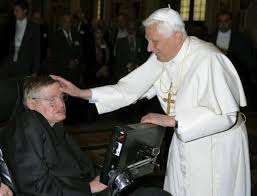
As a college student back in 1973, I read an article by the eminent physicist Stephen Hawking. He was imploring his fellow scientists to stop asking the question, and to stop exploring how the Big Bang came to be. Hawking was afraid that by asking the question it would allow for the possibility of GOD. He feared that people of Christian faith would use the question as a proof that God must exist. If we ignore the question, he felt, then those scientists who oppose the belief in a creative power outside nature could insist that God is unnecessary.
Shortly before his death, Hawking doubled down on his view by writing a book entitled “Brief Answers to the Big Questions.” In his chapter on God, he states that science has largely shown that God is unnecessary. In fact, Hawking died believing that all the questions we are asking of the universe will be solved by the end of this century. Since we can now see this accomplishment in our near future, God is obsolete. Hawking insists that if God is unnecessary, then He cannot exist. God can only exist if one can prove that He is necessary.
For some time now, people of faith have asked some uncomfortable questions about the beginning of our universe. How did all those atoms necessary for the Big Bang come into being? How did they coalesce into a form? How did they collide with each other at just the right speeds, directions, and combinations to produce a Big Bang that not only went against all known laws of physics, but resulted in an orderly universe that follows a set of rules as can be defined by physics?
When scientists refused to go along, Hawking began to articulate a theory that seems better suited to Star Trek fans: The Multi-Universe Theory. This theory states that an infinity of universes were all begun at the same instant. In this theory, our universe would have had to form as it is without God, because in an infinity of Big Bangs at least one would have had to be formed that matches our own. Therefore, God is not needed. Therefore, He does not exist.
The problem with this theory should be evident to any who seriously consider it. The same questions articulated above still need answers. In each of these worlds, how did the atoms form, coalesce, move at various speeds, etc.? This puts us right back at the question that Hawking insists we should not ask. It permits the existence of God, therefore, maybe He does exist.
Hawking and others have proposed several other theories over the years, all leading to similar questions, all leading to the possible conclusion that God IS. Notice that I have not stated that God IS, only that the questions lead us to the possibility that He DOES exist. While I believe in His existence, I understand that science can neither prove nor, contrary to Hawking the eminent physicist, disprove scientifically that He does not. All Hawking can say is that he knows God is unnecessary. Even there he overreaches.
As a confirmed skeptic turned Christian, all I can say, unlike Dr Hawking, is to keep asking questions. Perhaps you too will find God somewhere in our vast universe. Until next time, take care.
I am a Free Thinker/Christian

Yes, I know that the above title is seen as an oxymoron, a clear contradiction of terms. But please bear with me for a moment. In my last blog I shared a sampling of how I became a Christian through an emotional process. This is an attempt to share my more analytical process that has led me to retain my faith in a God I cannot see, touch, or otherwise experience in a physical manner.
The dictionary defines a Free Thinker as “a person who rejects accepted opinions, especially those concerning religious belief.” Skeptic magazine, Reason magazine, various atheistic groups, and many others view this as meaning the rejection of religious beliefs based on sound, empirical evidence. In other words, Free Thinkers reject GOD!
My great, great grandparents, Phillip and Sarah Kirby, were members of the Free Thinkers Society, in New Ulm, Minnesota in the 1860’s. The society met regularly to discuss why there is no god, and to share their disdain for religion in general. Their daughter, Blanch married William Hilby in 1885, who was a Catholic by name, but in reality, an atheist. Thus, was the family legacy of free-thinkers solidified. The Hilby’s and Kirby’s rejected the belief in something greater than themselves, or in other words: GOD.
Like my ancestors, I am by nature a skeptic. I need real proof before I am convinced of any argument. Understanding that emotion plays a huge part in many life decisions, I insist on waiting before making major decisions until I have had a chance to analyze and weigh the options. Car salesmen hate me, because I do my homework, think through the pros and cons, and refuse to “fall in love” with what they insist is the car of my dreams. In this way I try to put emotions aside as much as possible and come to a rational conclusion.
As stated in a previous blog, I originally came to be a Christian as a teenager through an emotional appeal, during an emotional time in my young life. However, I have since spent much time engaging in a thoughtful process to determine whether, or not, what I once accepted is still either relevant or true. A number of beliefs I once held have been overturned by a reasoned, analytical approach. I found myself questioning everything I had held dear.
Questioning my beliefs was most evident to the consternation of my college professors. Going to a small Christian liberal arts college, I found myself questioning many of the assertions of faith, theology, and orthodoxy expected of the followers of this religion. I could see the shake of their heads, intake of breath, and resigned look on their faces as I would enter the classroom. They, and many of my fellow students, must have wondered if I would ever be satisfied. I questioned everything and refused to accept that I “just needed to have faith. Just believe!” That was one answer that I refused to accept. Seven years and two degrees later, I was largely satisfied.
That does not mean that I have always remained satisfied. Over time I continue to question the assertions of my faith. I have a large collection of works by atheists to include the granddaddy of modern atheism, Bertrand Russell, as well as Hitchens, Dawkins, Stenger, Ehrman, and others. As I pick up the next volume, I begin by asking the author to challenge me, to show me where I have gone wrong, to bring illumination; especially in those times when I am most questioning.
I don’t pretend to have all the answers, but I have found that atheism (the belief there is no god) and agnosticism (the belief that we do not know if god exists) have not held the answers for which I’ve searched. I keep coming back to a largely orthodox belief in a God who created the universe yet knows me by name.
I am a free-thinking skeptic. This is not an oxymoron. My free-thinking skepticism has actually made my faith stronger. Exploration and questioning have brought me to acknowledge that God is real. Over time, I’d like to share some of the specifics of my quest for knowledge. Thanks for reading, and I’ll see you next time.
An Emotional Journey
I originally came to be a Christian through an emotional time in my young, teenage life. However, as I grew older, my skeptical side took over. In my next blog I’d like to share how I came to continue believing in God through an academic/analytical/thinking manner. But that will have to wait until next time. For now, this is how I got started.
Some of what I will share may seem far-fetched, but it is all real. It’s amazing how many families are “different” in so many ways from what we consider to be “normal.”
Growing up Hilby could be an interesting way to grow up. At least in our household it was. My dad was a chief in the Coast Guard, while mom was a bar maid in a waterfront night club owned by Seattle’s version of the mob. No, they were nothing like the Soprano’s. At least they weren’t as notorious.
Dad was, like several generations of his family before him, an atheist. He really hated “religious” people and had a special hatred of pastors – it didn’t help that I became one. Mom considered herself a Christian because she had never killed anyone, didn’t do drugs, and was neither a Buddhist nor a Catholic. Why she chose those two group to “not be” was always a mystery to me. Like dad, however, she was an alcoholic and serial adulterer. Those did not count as taboos in her Christian ideology. Also, like dad, she had a great disdain for what she called “church Christians.” The lone exception was her friend Nancy, who was the only one who could invite mom to church and get away with it.
Finally, one week, angry at being woken up by myself and my three younger siblings, after a late night of working and drinking, mom decided to take Nancy up on her offer and send us to church. It was meant more as punishment for our being so unruly while she only wanted to sleep it off. But while going there, I found something quite different from anything else I had ever experienced. One radical difference was that I found a group of people who seemed to actually like me, cared about me, and maybe even loved me.
I won’t bore you with the details, but as a young teenager I became a Christian. Of course, dad was mad, and knocked me down before giving me all the reasons that Christianity was a corrupt enterprise. Mom was more subtle than dad. She told me that I had to make a choice between liquor and God. According to family lore, my parents had started me drinking at the tender age of 3. Mom was convinced that alcohol was as important to me now that I was thirteen as it was to her. I decided to stay the course, and for the time gave up drinking. To say it was an eventful day, as well as an incredibly emotional one, is certainly an understatement.
As stated earlier, in my next blog I will explore how I grew from an emotional state to a more analytical understanding of my faith, and share part of my life-long search to ensure that what was an emotional beginning is backed up in an empirical way. Until then, thanks for reading.

Introduction to the Pastor

I have always enjoyed interacting with those who are unchurched . For the past several months I have been encouraged to post a blog, as well as videos. If you don’t know about me or the church I lead, please let me introduce myself. I am Steve Hilby, pastor of the house church “AtHome Church.” and yes, we are really a house church, that meets in people’s homes, rather than a traditional church building.
My wife and I came to Tracy, CA back in 1998, from the SF Bay area to start a church here. But we wanted to do it with a difference. Instead of having a church for those who are searching for a church, or those who like going to church, we would start one that reached out with the message of God’s love to atheists, agnostics, those who hate God, or those who were turned off and maybe mad at “CHURCH.” In other words, people who want nothing to do with church.
Eventually, after some trial and error, we decided that the house church was the best place for our endeavors. Here in the house church people can ask all the questions they desire, debate one another, search together whether there really is a meaning to life, and for those who need it, a place for healing. It would be a place where no one is judgmental, where people are taken as they are, where one is able to “kick the tires” before they are asked to commit. It was to be a place of love and learning. I think we have largely succeeded.
A brief note about myself: My father, grandfather, great grandfather, and great great grandfather Hilby were all atheists. When I announced I was becoming a preacher, some members of the family declared me dead. (I can assure you I am not) Meantime, my mother claimed to be a christian, while professing a hatred for what she called “those CHURCH christians!” In a later blog I would like to share some of my journey into believing there is a God, and why I have maintained my faith.
I will try to use this blog to talk to those of you who want nothing to do with God or His Church. Hopefully you will find something useful. If you already love God and His Church, then I encourage you to read-maybe you will find something useful as well.
 Tracy AtHome Church